
McMurdo AIS EPIRB SmartFind G8 PLUS AIS
GMDSS compliant AIS EPIRB
- MEOSAR compatible Satellite Location
- Automatic deployment option
- Small and lightweight
- Built-in GPS and Galileo receiver


Details
GNSS EPIRB
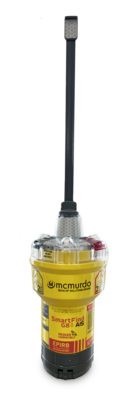
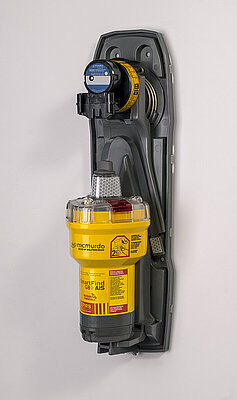
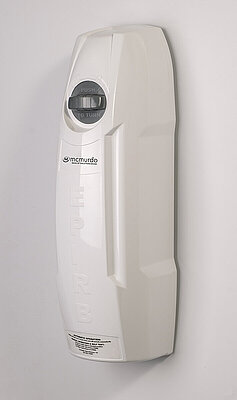
The McMurdo SmartFind G8 PLUS AIS EPIRBs are satellite distress beacons designed to operate in conjunction with the Cospas-Sarsat international satellite search and rescue system and are MEOSAR satellite compatible. For GMDSS compliance, the McMurdo SmartFind G8 PLUS AIS EBIRPs have a slimline fully enclosed float free housing which allows self-testing of the EPIRB in question. The EPIRBs are also available with a quick release bulkhead mounting bracket for carry-off situations. When considering the McMurdo SmartFind G8 PLUS AIS EPIRBs for your vessel, you will have GNSS receiver included. This means that by a built-in GNSS and the ability to provide Search and Rescue (SAR) services with location details, including latitude and longitude to a typical accuracy of +/- 62m. Both models rely on the global Cospas Sarsat satellite system able to locate beacons transmitting on the 406MHz frequency to within 5km (3nm). Once SAR units are at the distress scene the beacon’s 121.5MHz homing transmitter and it’s high intensity strobe light aid final location even in poor visibility. McMurdo SmartFind G8 PLUS AIS EPIRBs are fully compatible with the Cospas-Sarsat and Global Maritime Distress and Safety System (GMDSS) regulations and meets the requirements of the International Maritime Organization (IMO). When shipped the beacon is programmed with a unique serial number which must be registered with the national authorities. Where national authorities allow, the beacon can be re-programmed with the vessels satellite or radio call sign. This is done by the distributor using an infra-red light pen connected to a computer. The McMurdo SmartFind G8 PLUS AIS EPIRBs are supplied with a fully enclosed automatic float free housing which allows it to be self-tested while in the housing. For non GMDSS use the unit can be supplied in a quick release bulkhead mounting bracket. Once removed from its mounting bracket, activation happens automatically by immersion of the water or manually by a protected push button on the top of the EPIRB. An additional self-test button runs a short diagnostic check and indicates that the EPIRB is ready for use. The specially designed wall bracket prevents unintentional activation in carry-off situations
AIS Function
During distress the EPIRB will also output a signal on AIS frequencies, to help rescue operations. This signal will also be able to be received by regular AIS systems from other vessels.
Technical informations:
Frequency: 406,040 MHz & 121,5 MHz
Power Output: 5W nominal (406,050 MHz) | 70mW nominal (121,5 MHz)
AIS transmitter: 161,975 MHz | 162,025 MHz 1W EIRP
GNSS: GPS, Galileo
Channels: 92
Optical homer: 23 flashes per minute
Operational time: 48 hours minimum
Operating temperature: -20°C to +55°C
Automatic release depth: 4 m maximum
weight: 0,71 kg